Meet People in Real Life

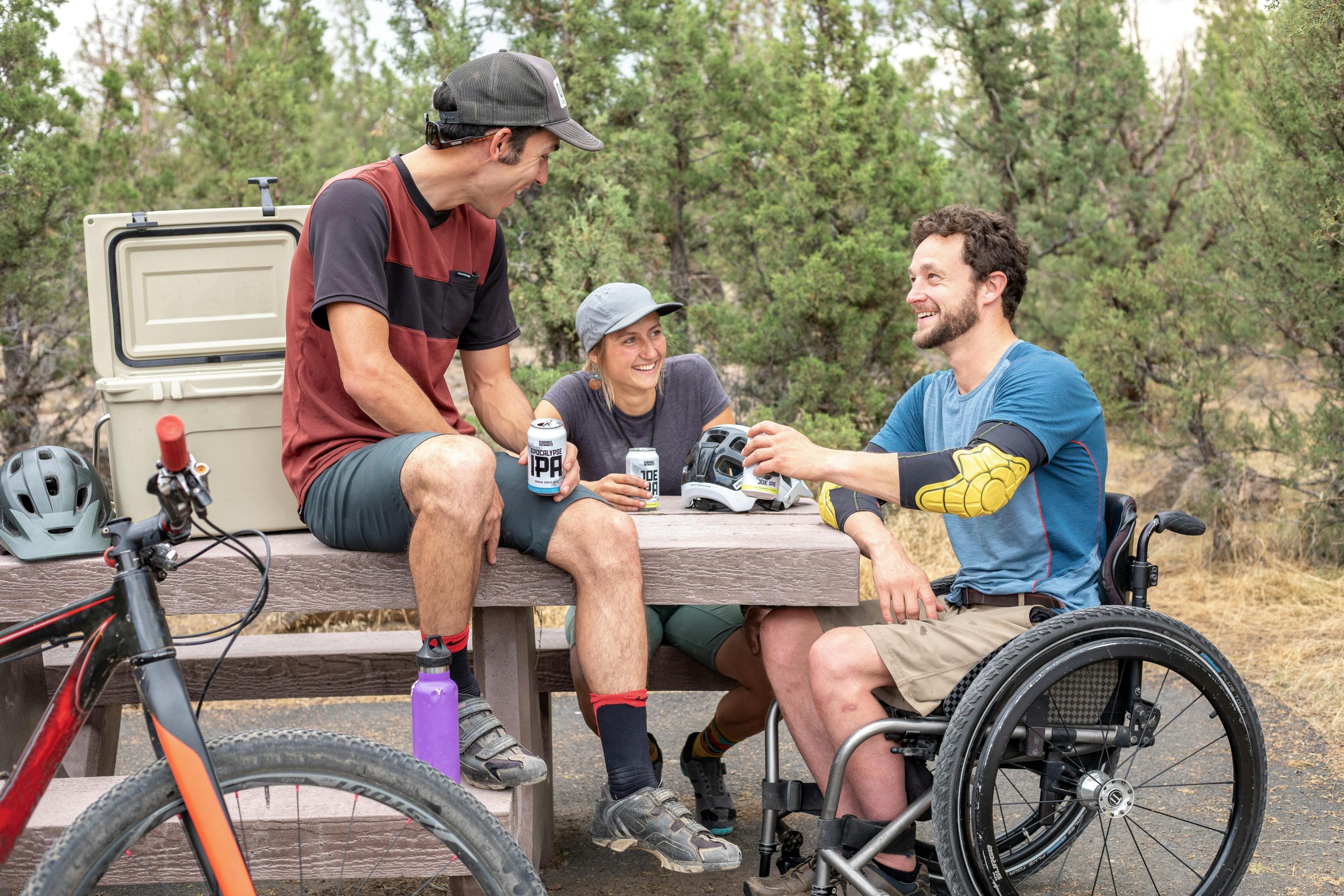
Your happiness, health, and longevity are strongly influenced by the strength of your relationships. You need to meet people in real life – online connections have only a small fraction of the effect of meeting someone face to face.

If you live alone, it is even more important to take your social connections seriously. Over time, unless you continually work to renew your relationships, they will weaken. If you don’t have any close relationships, cultivate some. Join a sports club or volunteer in an organization. Doing something physical together with someone is an easy first step to building a relationship.

Did you meet with friends or family this week? If not, make plans to meet someone this weekend.

The Power of the Mind

You can think yourself healthier. Scientists have just published another placebo effect study, this time showing increased vaccine effectiveness. The people who did positive thinking exercises showed increased antibody production after 14 and 28 days.

The inverse is that you can probably also think yourself sicker, though for ethical reasons this has not been studied.

Make sure you have a technique for getting yourself in a better mood. For some, it can be uplifting music. For others, it might be a walk in nature. Spend a few moments identifying something that energizes you. And then do it today.

Simple Health

To improve your health, do the simplest thing that could possibly work. Don’t start an intricate supplement regimen or try to follow a complex set of dietary guidelines. The traveling snake oil salesman has moved online and is now a health influencer, but that doesn’t remove the quackery.

Decide on one parameter you want to track (weight, sleep, whatever) and make one simple change to your life. For weight loss, it could be preparing more meals from scratch. For sleep, it could be putting down your phone one hour before bedtime. Track your adherence to your chosen change and the tracked parameter for two weeks.

If you got results, good.

If you didn’t, either your adherence wasn’t strong because you couldn’t implement the change consistently, or the change didn’t affect the tracked parameter. Never mind. Choose another change and try again.

Get Outside

We had 7 hours and 23 minutes of daylight today here in Denmark. It’s dark when you go to work, and it’s dark when you head home. That means it is even more important at this time of year to use your lunch break to get some light and fresh air.

Don’t just stay at your desk and just eat a sandwich. Or even worse, eat whatever is still available in the vending machine or the snack cabinet. If you don’t believe it matters, find some kind of productivity metric and track your morning and afternoon. It can simply be how much time you spend on each application on your computer. Do one week with lunch at your desk, and one with a short walk outside. Compare. You’ll find that your afternoon in the week with lunch at your desk will show way more YouTube, social media, and aimless procrastination.

How to Break Bad Habits

There seems to be a day for breaking every bad habit. For example, today is “World No Tobacco Day.” Having one special day can be good for awareness campaigns. Actually changing habits takes much longer.

The reason we call habits “bad” is because they are working against some other goal we have. Our habits might be bad for our health, or take time away from more important things. The trick is not to focus on the habit you don’t want, but instead focus on the better result you do want.

Find Time for Some Walking

You don’t have to run. But you do have to exercise a little every week. Your news feed and social media will be full of exercise tricks and gadgets, but the official recommendations are really simple: 150 minutes of moderate exercise like walking or cycling, or 75 minutes of running or similar.  

You can easily fit 150 minutes of walking into your week in 15-minute intervals. Get off the bus or train a little before your destination and walk for 15 minutes. If you do that on the way to work and on the way home, that gives you 30 minutes each work day. If you are in the office five days a week, that adds up to 150 minutes. 

If you are working from home, walk to work anyway. That means taking a 15-minute walk around the block when you start your workday, and another 15-minute walk when you end it. That has the added benefit of setting boundaries around your work time. The first walk can put you into focused “work mode”, and the second walk can allow your mind to change from work to relaxation. 

Create a Breathing Habit

How is your breathing? Now you might notice it. But most of the time, your breathing just happens. Try taking a few deep breaths. Notice how you feel calmer.

Breathing is interesting because there is a direct two-way connection between your breathing and your emotional state. Your stress level affects your breathing, but your breathing also affects your stress level.

To make sure you remember to take some time to breathe deeply, connect breathing with something you already do. Find some action you take several times a day, and take a few deep breaths before you do it. For example, whenever you pick up your coffee mug for a refill, hold the mug while you take three deep breaths. Getting some good breathing into your life will reduce stress.

Experiment on Yourself

Many self-trackers run science experiments on themselves. You should, too. I don’t recommend injecting yourself with strange drugs from the internet. I am talking about making changes to your diet and tracking the outcome.

Science has shown that improved diet can have as much effect as the latest innovation from the pharmaceutical industry. To improve your life, try an experiment.

Like Newton and Da Vinci, you’ll need a notebook. For one week, write down how you feel. That is your baseline. Then make a simple diet change. You already know what a better diet looks like. For example, you can replace an unhealthy snack with nuts and raisins. Continue writing down how you feel. After a few weeks, examine your notes and see if you feel better than the baseline before you made the change. If you do, great! Keep the change. If you don’t feel any improvement, that doesn’t mean the experiment failed. It means the experiment was successful and you proved that this change was not right for you. Make another change and repeat the experiment.

Use science to improve your life!

You Need 8,000 Steps per Day

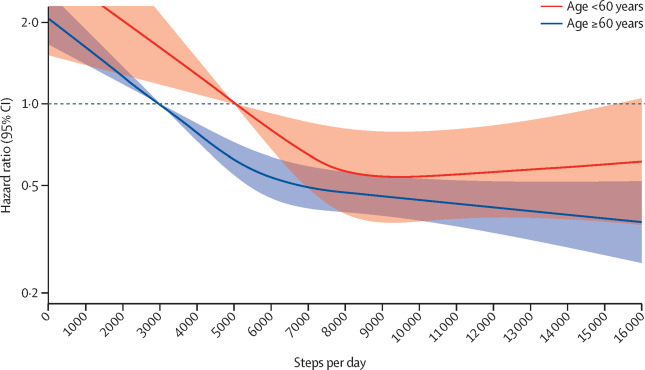
You don’t need 10,000 steps a day. But 8,000 steps a day cuts your risk of dying prematurely by 40%. A big meta-study published in The Lancet gathers data from 15 large studies. They conclude that mortality – your risk of dying in any given month – at 8,000 steps is only 40% of that at 5,000 steps. Every 1.000 steps above 5.000 give you a 10% improvement.

If you believe you already take 8,000 steps per day, I have bad news for you: You don’t. Most people significantly overestimate their activity level. There is only one way to know and increase your number of steps: Count them. Get an app for your phone, or use a smartwatch or fitness tracker. Set a goal of 8,000 steps and find a way to track your progress. You will find that it also improves your productivity and your mood.

Winter is Over. Get Outside

The calendar tells us winter is over. If you have been hibernating, now is the time to get out of your cave.

Fresh air, daylight, and exercise are crucial elements of your physical and mental well-being. You have to get outside. No matter how fast you pedal on your Peloton bike, it is not enough. Your body needs to see daylight and breath fresh air. Make an appointment with yourself on your calendar to take a walk outside tomorrow.