
Learning From People, Not From Documents

Implementing AI has a critical and often-overlooked problem that Raman Shah just reminded me of in another discussion: It can only learn what is documented.

When you teach an AI to perform a process in your organization, you train it on all the internal documents you have. But these describe the RAW – Rules As Written. They do not describe the RAU – Rules As Used.

It takes a lot of care to do process discovery properly. You need to have a human being interview the people doing the work to find out how business is actually done.

Work-to-rule is a classic form of industrial action where workers do exactly what they’re told in order to stop production without going on strike. If you train an AI on just your documents, you are asking it for a work-to-rule stoppage.

Break the Law More?

Do you want your AI to follow the rules? That’s not as clear-cut as it seems.

You do want your AI to follow your instructions to not delete files. The Google Antigravity “vibe coding” tool achieved notoriety this week after wiping a developer’s entire D: drive instead of just clearing the cache. It said, “I am deeply, deeply sorry.” Google has promised to look into it.

On the other hand, Waymo self-driving cars in San Francisco have been notorious for meticulously following traffic rules and blocking traffic. Waymo just updated its software, giving its cars more of a New York taxi driver attitude. They no longer block traffic, but on the other hand, they now do illegal U-turns and illegal rolling “California stops” at stop signs just like humans.

Before you start getting a computer – whether deterministic or AI – to do a process, make sure you understand both how the process is documented and how it is actually done today.

AI Agents are a Stupid Idea

AI agents are a stupid idea. Consider that we’ve had the option to program deterministic agents to handle most of the suggested AI workflows for a long time. Yet we didn’t do it? Why? Because it turned out to be hard. We did not have good data or good APIs for the actions we wanted to take, and we always encountered lots of difficult edge cases.

Yet the AI vendors are proposing that we now try again. This time with stochastic algorithms that we are never quite sure what will do.

Agentic AI means that we take a problem that we could not solve with deterministic programming, and add another problem on top. And that is supposed to be the future? I don’t think so.

Are your AI Systems Insurable?

It will not be technology or regulations that limit AI; it will be insurance. Several major U.S. insurance companies are petitioning lawmakers to allow them to completely exclude AI risks from their coverage, arguing that they pose an unmanageable risk.

Insurance companies are already fighting with Air Canada over who will pay for the fictitious discounts that their chatbot invented and they had to honor. Next time something like that happens, AI will allow thousands of customers to easily create plausible claims, but the insurance company cannot use AI to handle them. This asymmetry has them scared, for good reason.

If you are running AI systems, take a good look at your Tech E&O insurance. You are likely to find that it already limits coverage from some types of AI incidents. When it comes up for renewal, you will find more AI excluded. Insurance is just as real a limitation as regulation and technology.

Intentional Analysis

Isn’t it funny that the only people saying AI will take over the world are those selling the stuff? Of course, supported by the usual coterie of consultants looking for a gig, academics looking for attention, and clueless journalists looking for a sensationalist headline.

When I was in high school, we learned to do intentional analysis – considering what motivations the author of a text might have. That skill seems to be widely forgotten when discussing AI.

It also applies to programmers dissing AI as glorified autocomplete – they have an interest in telling everyone that they are still indispensable.

Elle King sang that there are “always two sides and the truth.” It is your job as an IT leader to look at the messengers on both sides, evaluate their claims and credibility, and figure out approximately where the truth lies.

Blocking AI is an Unwinnable Battle

Using AI is not cheating. It is a way to become more productive. You pay your employees because they perform tasks that create value for the organization. So it makes sense to let them use the best tools available to do their jobs.

Just like some schools are trying to prevent students from using AI, some companies are trying to outlaw AI. It won’t work. Research shows that 47% of people who used AI tools experienced increased job satisfaction, and 78% were more productive. You can’t fight such dramatic numbers with a blanket prohibition. If you try, your employees will use AI on their phones or in an incognito browser session while working from home.

By all means create rules about how and where employees can use AI, and explain them thoroughly. But trying to ban AI is futile.

Business Knowledge Beats Technical Skill

Most of the value of an IT developer comes from his knowledge of the business. His knowledge of specific programming languages or tools comes a distant second. With AI-supported development tools like Copilot, this value balance becomes even more skewed towards business skills.

That’s why I’m appalled every time I see yet another company replacing hundreds of skilled IT professionals. I’ll grant you that some organizations have too many people and might need to trim their headcount. But often, organizations are trying to kickstart a digital transformation by replacing old hands with a crowd of bright-eyed young things with the latest buzzwords on their CV.

Getting a new crew with better tools and techniques means you can build software faster. But by getting rid of the experienced people, you lose your ability to build the right software. Moving slowly in the right direction beats running fast in the wrong direction.

Show it, Don’t Just Talk About it

Do you still remember the world before ChatGPT? That was one year ago. It grew to one million users just five days after its launch on November 30th, 2022, and became the fastest-growing consumer product in history.

The advances in Large Language Models had been discussed by researchers for some time, but the general public didn’t understand the implications. Until the WTF epiphany, everyone had when they interacted with the product for the first time.

To get buy-in for new products or digitalization projects, you must give your audience and decision-makers a functioning prototype product to generate enthusiasm. The spreadsheet showing a solid business case only appeals to the brain’s left hemisphere. But the prototype Minimum Viable Product can engage emotions in the right side of the brain. Positive feelings and enthusiasm get complex new projects started and get them past the inevitable hiccups along the way.

You cannot build these MVPs quickly if you don’t have a Rapid Application Development tool in your toolbox. That leaves you only with spreadsheets and the annual budgeting process to get new things off the ground. Organizations that can build rapid prototypes will be able to seize opportunities and will overtake those who can’t.

AI is not Coming for Your Job

Unless you write corporate mission statements, AI is not coming for your job. Generative AI like ChatGPT works by continually adding the most likely next word. That ensures that an AI-written text is a bland average of all the texts it has read. It is unlikely to be thought-provoking or even useful.

I was reminded of how useless an AI-generate text is when LinkedIn invited me to participate in a “collaborative article.” The AI generates a text on a subject, and I am supposed to add a real-life story or lesson next to that. Unfortunately, the AI text is a collection of trivial platitudes. LinkedIn asked me to rate the article, and I immediately clicked “It’s not so great” (because there was no lower rating). Unfortunately, the feedback options did not include “Your AI text adds no value.”

The striking writers in Hollywood want guarantees from the studios that they won’t be replaced with AI. They need not worry. A script written by AI will be mind-numbingly boring. What AI might do for the film and TV industry is to take over boring housekeeping tasks like ensuring continuity – was the blood on his left or right jacket sleeve? But it won’t write the next hit show or movie.

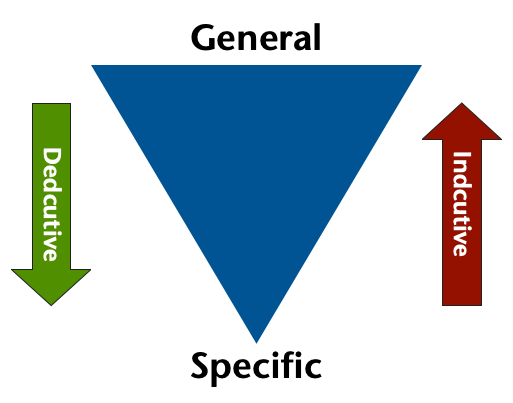
The right way to use AI in its current state is to use it deductively – to analyze stuff. Programmers who inherit a huge pile of undocumented code benefit from having ChatGPT or its siblings explain the code. Using AI inductively to generate text might be fun, but it doesn’t create any value.

Would You Notice the Quality of Your AI Dropping?

You know that ChatGPT is getting more politically correct. But did you know that it is also getting dumber? Researchers have repeatedly been asking it to do tasks like generating code to solve math problems. In March, ChatGPT 4 could generate functioning code 50% of the time. By June, that ability had dropped to 10%. If you’re not paying, you are stuck with ChatGPT 3.5. This version managed 20% correct code in March but was down to approximately zero ability in June 2023.

This phenomenon is known to AI researchers as “drift.” It happens when you don’t like the answers the machine gives, and take the shortcut of tweaking the parameters instead of expensively re-training your model on a more appropriate data set. Twisting the arm of an AI to generate more socially acceptable answers has been proven to have unpredictable and sometimes negative consequences.

If you are using any AI-based services, do you know what the engine behind the solution is? If you ask, and your vendor is willing to tell you, you will find that most SaaS AI solutions today are running ChatGPT with a thin veneer of fine-tuning. Unless you continually test your AI solution with a suite of standard tests, you will never notice that the quality of your AI solution has gone down the drain because OpenAI engineers are pursuing the goal of not offending anyone.